
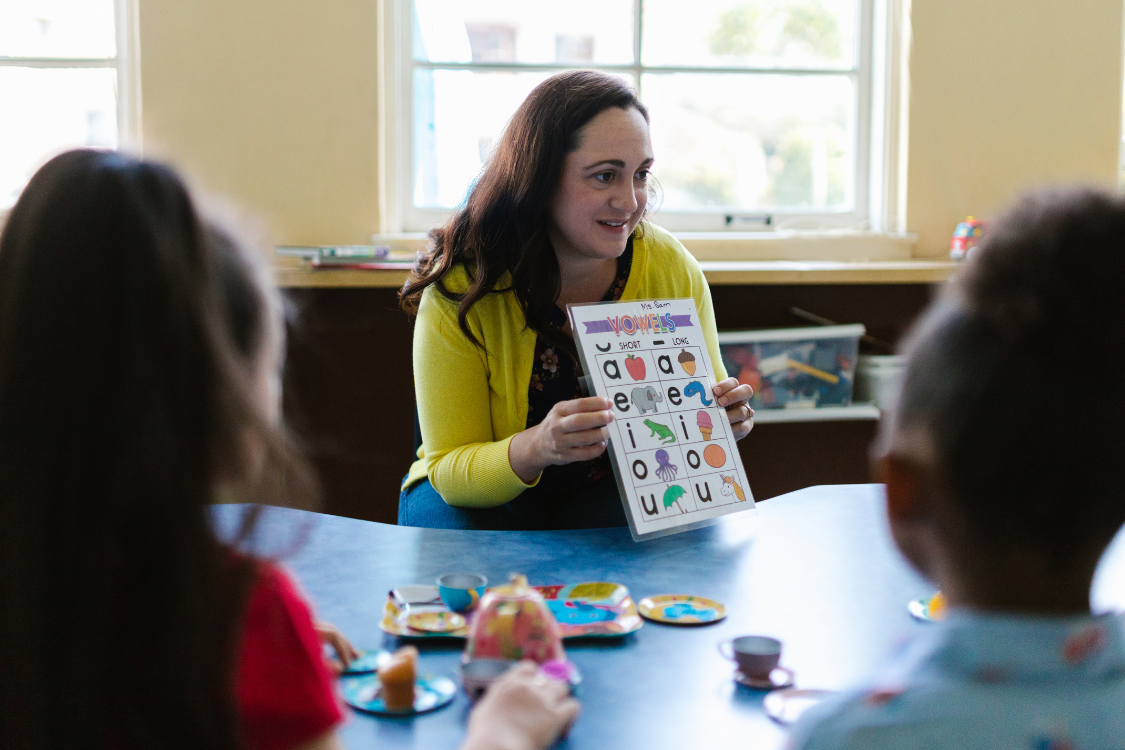
Parents often wonder exactly how many minutes of phonics instruction their child needs each day, and it’s a fair question to ask. Too little instruction leaves gaps in decoding. Too much, delivered without variety, can wear a child down before the lesson even sinks in. Researchers have studied this question directly, and the honest answer is more nuanced than a single number, but it is still genuinely useful.
What The Research Shows
A 2024 meta-analysis published in Scientific Studies of Reading examined how much explicit phonemic awareness instruction, a core building block of phonics, helps young children, and found something worth knowing. The relationship between instructional dosage and reading gains is not a straight line. For basic, oral-only phonemic awareness instruction, effects improved steadily up to about 10.2 cumulative hours, then began to level off and decline. But when phonemic awareness instruction was paired with letters, which is closer to how most classroom phonics instruction works, the pattern reversed: effects kept climbing through at least 16 hours with no decline in sight. In other words, teaching sounds and letters together, the way structured phonics programs already do, appears to reward more instructional time rather than hitting a ceiling.
For parents, this is reassuring in a specific way. If your child’s phonics instruction connects sounds to letters, which good programs do, you are less likely to be wasting time by continuing consistent daily practice. What matters most is making sure the minutes a child gets are explicit, systematic, and genuinely engaging.
Why A Single Daily Number Does Not Tell The Whole Story
It is tempting to want one clean answer: thirty minutes, forty minutes, and be done with the question. But dosage research like this points to something more useful than a magic number: how instruction is structured changes how much dosage helps. That means quality and design carry real weight alongside quantity, not instead of it.
This has a practical implication for how you evaluate your child’s classroom or a phonics program you are considering at home. A 20-minute lesson where a child is blending sounds, building words with letters, and getting immediate feedback on errors will outperform a 40-minute lesson built around worksheets and passive review. If you are trying to judge whether your child is getting enough phonics instruction, ask what happens during that time, not just how long it lasts.
How Time Differs By Grade And By Need
Not every child needs the same amount of instruction, and this is where a structured intervention framework matters. According to the WWC practice guide on assisting struggling readers through Response to Intervention, students who score below benchmark on a universal reading screener typically receive small-group, standardized intervention on top of their regular classroom instruction, usually meeting three to five times a week for 20 to 40 minutes per session. Students who continue to make insufficient progress after a reasonable period of that support move into a more intensive level of instruction delivered daily, targeted specifically at the skills that are not yet solid.
This tiered structure matters for parents to understand because it reframes what “more phonics” means for a struggling reader. It is not simply a longer version of the same classroom lesson. It is additional, smaller-group instruction layered on top of core teaching, tied to specific skill gaps identified through assessment, and adjusted based on ongoing progress monitoring. A child who is behind is not failing to try hard enough during regular class time. They likely need a different intensity and structure of instruction, not just more of the same approach repeated longer.
What This Means For Parents At Home
If your child’s school is providing focused, explicit phonics instruction as part of the regular school day, you do not need to recreate a full classroom lesson at home. Ten to fifteen minutes of consistent, engaged practice most days does real work, especially when it involves active participation rather than passive listening. Read a decodable book together and pause to sound out unfamiliar words instead of supplying them. Practice a handful of letter-sound combinations with magnetic letters or a whiteboard. Play simple blending games in the car. These small, repeated moments of engagement add up meaningfully over a semester.
It also helps to trust the tiered system your child’s school is likely already using. If your child needs more support than typical classroom instruction provides, a well-run MTSS or RTI framework should already be identifying that through screening and moving your child into small-group intervention without you needing to request it. That said, it never hurts to ask specifically what tier of support your child is receiving and what skills that support is targeting. Being an informed, engaged parent, not an anxious one, is the goal here, and understanding how the system is supposed to work gives you real ground to stand on in that conversation.
Phonics Fits Inside A Bigger Literacy Picture
It helps to remember that phonics instruction does not exist in isolation. It sits alongside phonemic awareness, fluency, vocabulary, and comprehension as one of five essential components of reading instruction. Early on, when children are just learning to decode, foundational skills like phonics reasonably take up a larger share of classroom literacy time. As students become more fluent readers, that balance naturally shifts toward comprehension, vocabulary, and writing, with phonics settling into a smaller, more targeted role, often folded into spelling and word study rather than standing alone as its own block.
This reframes the original question in a useful way: not to maximize phonics minutes indefinitely, but to provide focused, explicit instruction delivered consistently enough for a child to master the alphabetic code, with intensity adjusted for kids who need more support, and a natural shift toward other literacy skills as decoding becomes automatic.
The Bottom Line On Daily Phonics Instruction
Research points to a genuine dosage story for explicit phonics and phonemic awareness instruction, one where how instruction is structured, especially whether it connects sounds to letters, matters as much as how many minutes it runs. Struggling readers benefit from additional, targeted instructional time layered on through a tiered support system, not simply more of the same lesson stretched longer. For more research-backed guidance on structuring phonics instruction well, our phonics research update digs deeper into what current studies show, and Phonics.org publishes fresh, evidence-based articles regularly for parents and teachers supporting emergent readers at every stage.
