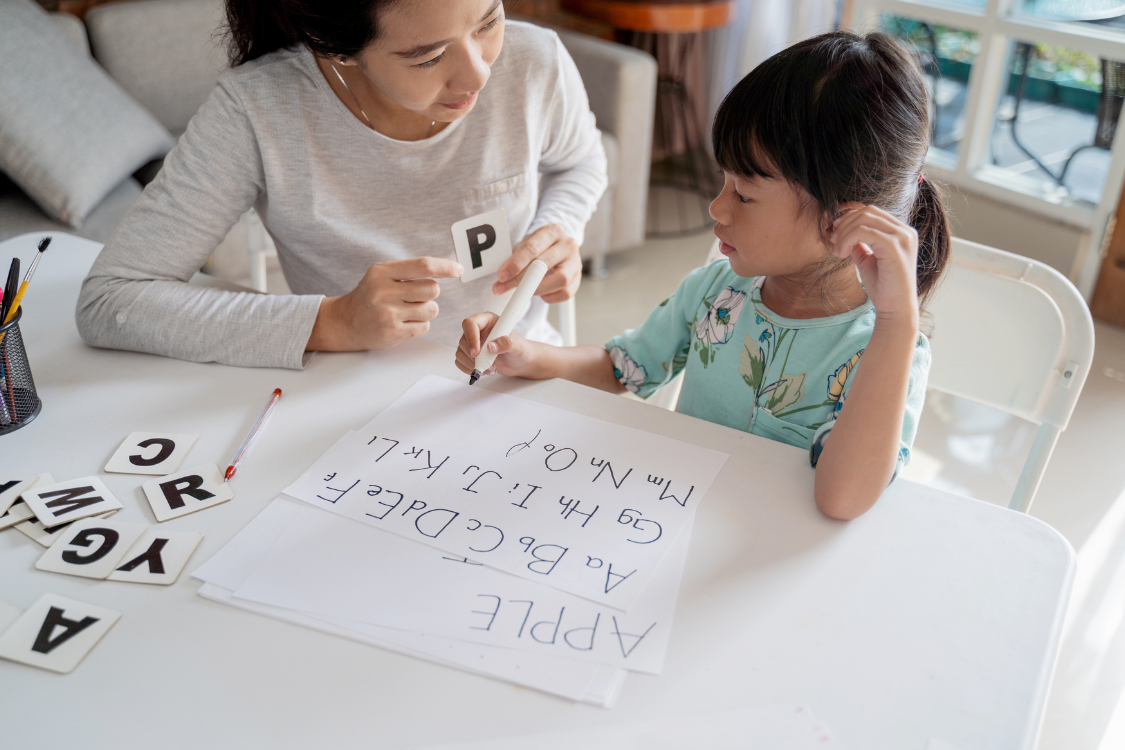
Phonics Manipulatives That Beat Any Screen

A set of letter tiles. A tray of sand. A stack of index cards. None of these cost much, and none of them require charging. Yet when used with intention inside a structured phonics lesson, simple hands-on materials often do something a tablet cannot: they make abstract sound-letter relationships physically real for a young child. For parents and teachers looking to build strong readers, understanding what manipulatives are and how to use them is time extremely well spent.

Why Hands-On Learning Supports Phonics Instruction

The science of reading establishes that learning to decode print is not a natural process. The brain must build new neural pathways connecting spoken sounds to written symbols, and that work requires direct, explicit instruction. What hands-on materials add to that instruction is multisensory engagement: when a child sees a letter card, says the sound aloud, and physically moves a tile into a box at the same time, three separate sensory channels are working together to encode the same piece of information.

Research consistently supports this approach. According to IMSE, the Orton-Gillingham method, one of the most rigorously studied frameworks in structured literacy, is built around visual, auditory, kinesthetic, and tactile learning. Materials and activities that activate the senses, including manipulatives, hand motions, and sand writing, support early learning and can be gradually removed as skills are mastered. 

Sound Boxes: A Foundational Tool for Every Early Reader

Sound boxes, also called Elkonin boxes after psychologist Dmitri Elkonin, are one of the most evidence-based manipulative tools in early literacy instruction. The setup is simple: a row of empty boxes is drawn or printed on paper, with one box for each sound in a word. A child pushes a counter, chip, or tile into a box as they say each individual sound, then blends them back together to read the whole word.

This physical act of moving an object for each sound does something important. It makes phoneme segmentation, one of the strongest predictors of reading success, visible and concrete. Children who are still developing the ability to hear that “ship” has three sounds (/sh/ /i/ /p/) benefit enormously from the spatial representation that sound boxes provide. As skills grow, letters or letter tiles can replace the counters, connecting phonemic awareness directly to phonics. Sound boxes help all students develop phonemic awareness, including children learning English who may encounter sounds not present in their home language, making them a particularly versatile tool for diverse classrooms and homes. 

Letter Tiles and Word Building

Letter tiles are another foundational manipulative with wide application across reading levels. Unlike worksheets, tiles allow children to physically build, break apart, and rebuild words, which reinforces both decoding and spelling in a single activity. A child working on short vowel patterns can pull out the letters /c/, /a/, and /t/, blend them into “cat,” then swap the first tile for /m/ to build “mat,” and again for /h/ to build “hat.” That physical act of changing one tile at a time makes the alphabetic principle tangible in a way that circling an answer on a page does not.

For teachers, letter tiles are equally useful in small group instruction. Students working at slightly different levels can be building different words simultaneously using the same tile set, making differentiation straightforward. Understanding how phoneme-grapheme connections develop in early readers can help you choose and use any manipulative more effectively. 

Low-Cost Manipulatives Worth Having at Home or in the Classroom

Many effective phonics manipulatives require little investment. Sand trays let children trace letters while saying the corresponding sound, adding a tactile dimension that reinforces letter formation and sound association simultaneously. Whiteboards and markers allow children to practice writing words from dictation and erase and correct immediately, which keeps the feedback loop tight and removes the anxiety of permanent mistakes. Magnetic letters on a refrigerator or whiteboard function similarly to tile sets and are easy to find in most households. Even simple counters, coins, or small pebbles can serve as sound box markers.

The key in every case is how the manipulative is used, not how much it costs. A sand tray used without a clear phonics objective produces little learning. That same tray, used purposefully within a structured phonics lesson that introduces a specific sound-letter correspondence, gives the hands-on experience something to anchor to.

When Screens Should Step Aside

This is not an argument against phonics apps entirely. Well-designed digital programs have a real role to play in building practice time and providing feedback when a teacher or parent is not available. But there are situations where physical manipulatives do the job better: when a child is first learning a new phonics concept, when a child is struggling with phoneme segmentation or blending, and when engagement with a screen has become passive rather than active. A child mindlessly tapping through an app activity is not in the same learning state as a child deliberately moving letter tiles to build a word they have never seen before. The deliberate physical act requires and produces a different quality of attention.

Parents and teachers who build a small collection of hands-on phonics tools and use them consistently within a structured routine often find they are among the most effective investments they make in a child’s reading development. For more research-backed strategies and expert phonics resources, visit Phonics.org.

What to Look for in a Phonics App Before You Download

There are thousands of phonics and reading apps available for kids right now, and most of them look convincing. Bright colors, animated characters, cheerful sound effects. It all signals “educational.” But looking like learning and actually producing learning are two very different things. Choosing the wrong app can feel productive while doing very little for your child’s foundational reading skills. Knowing what to look for before you download changes everything.

Why This Decision Matters More Than It Seems

The stakes for early literacy are real. Just 31 percent of fourth-grade students performed at or above the proficient level on the 2024 NAEP reading assessment, down two percentage points from 2022 and four points from 2019. Nearly seven out of ten fourth graders are not reading at grade level. Early reading instruction matters enormously, and the tools parents choose to use at home are part of that picture.

Phonics apps can be genuinely useful additions to a child’s literacy routine, but only if they are built on the right instructional foundation. A game that rewards tapping the correct letter is not the same as a program that builds phonics knowledge in a deliberate, research-supported sequence. Parents deserve to know the difference.

The Non-Negotiable: Explicit and Systematic Instruction

The single most important thing to look for is whether an app teaches skills explicitly and systematically. These two qualities come directly from the science of reading and are not interchangeable with “interactive” or “fun.”

Explicit instruction means the app teaches the concept directly rather than expecting children to figure it out through trial and error. The app should model the sound, connect it to the letter, and provide clear, consistent feedback. Effective phonics programs define each concept clearly, model the skill, and follow with guided practice, using specific language closely tied to the learning objective so children can understand each step with clarity. 

Systematic means skills are built in a logical order: short vowels before long vowels, simple consonant-vowel-consonant words before blends and digraphs. A good app will not jump from letter recognition to compound words. Approximately 84 percent of English words are phonetically regular, and teaching the most common sound-letter relationships in a logical sequence is foundational to strong reading development.

What a Strong App Actually Covers

A quality phonics app will address phonemic awareness, letter-sound correspondences, blending, segmenting, and eventually more complex spelling patterns. What often gets left out in lower-quality apps is the practice of blending sounds into decodable words. Letter recognition games are easy to make engaging, but if a child is only identifying isolated letters rather than combining sounds to read words, the app is stopping short of where reading actually happens. The whole point of phonics instruction is to give children the tools to decode words they have never seen before.

Adaptive Learning and Progress Feedback

One real advantage of a well-designed digital program is the ability to adjust based on how a child is actually performing. Research shows that programs with positive effects provide adaptive instruction based on embedded assessments, clear scope and sequences with skill building over time, and opportunities for practice and feedback in both isolation and in texts.

Look for apps that track mastered skills, adjust difficulty accordingly, and give parents some visibility into progress. A reporting dashboard is a significant feature, not a bonus. Without it, parents have no way of knowing whether the app is working. Feedback during activities matters too. An app that simply replays a wrong answer without corrective guidance is missing a core piece of good instruction.

Red Flags Worth Knowing

Some of the most-downloaded phonics apps carry warning signs that are easy to miss. Whole-word memorization presented as phonics is a common one. If a child can only read words they have seen repeatedly in the app but cannot sound out new ones, the app is likely using a sight-word or whole-language approach dressed up as something else. Frequent ads that interrupt learning are another concern, as they break instructional flow in ways that genuinely interfere with retention. Heavy gamification without actual instruction is worth watching for, too. Points and timers can make an app feel productive while the phonics content underneath is thin.

Let Expert Reviews Do the Heavy Lifting

Sorting through hundreds of apps on your own takes real time. The expert phonics app reviews at Phonics.org evaluate programs across three criteria from an educator’s perspective: quality of literacy instruction, usability, and engagement. Each review examines whether the app’s methods align with the science of reading, what it does well, and where it falls short.

The best phonics app for your child teaches explicitly, builds skills in a logical sequence, adapts to their progress, and gives you feedback along the way. Those qualities do not guarantee your child will love the app, but they make it far more likely to actually work.

For more guidance on supporting early readers and finding the right phonics tools, visit Phonics.org.

How To Use Phoneme-Grapheme Mapping at Home

When your child writes “sip” instead of “ship,” they’re not making a careless mistake. They’re missing a small but important skill. They haven’t yet learned that two letters, “s” and “h,” can work together to make one sound. That single insight is what phoneme-grapheme mapping teaches, and it’s one of the simplest, most effective reading tools you can use at home. All it takes is paper, a pencil, and about five minutes a day. 

What Phoneme-Grapheme Mapping Actually Is

Phoneme-grapheme mapping is the practice of breaking a spoken word into its individual sounds (phonemes) and matching each sound to the letter or letters that spell it (graphemes). English uses 44 phonemes but only 26 letters, which is why mapping matters. Children need to see that “sh,” “ck,” and “igh” each represent a single sound, even though each is written with multiple letters.

The technique comes directly from research by Dr. Linnea Ehri on how the brain stores words for instant retrieval. The Institute of Education Sciences Practice Guide on foundational reading skills lists “develop awareness of the segments of sounds in speech and how they link to letters” as one of its four core recommendations for K through 3 readers. That recommendation is mapping in plain language.

Why It Works for Every Emergent Reader

Mapping isn’t only for kids who are behind. Every emergent reader benefits because mapping is how the brain builds its sight-word bank. Orthographic mapping is the process by which words become automatic, and it only happens after they’ve been mapped sound by sound in memory. Memorizing word shapes does not produce lasting recall. Decoding plus mapping does. 

For struggling readers, the case is even stronger. A peer-reviewed study published in Frontiers in Psychology found that children with dyslexia show measurably reduced ability to apply newly learned grapheme-phoneme correspondences while reading. They can learn the connections, but they need more practice and more repetition. Mapping provides exactly that, with a visual anchor that turns abstract sounds into something a child can see, touch, and write.

The Basic At-Home Setup

You don’t need a curriculum or an app. You need paper, a pencil, and three to five minutes. Draw three to five empty boxes in a row. These are called Elkonin boxes, and they’re the foundation of mapping at home. One box equals one sound, not one letter.

Pick a short, decodable word your child can already say. Start with consonant-vowel-consonant words like “cat,” “sun,” “map,” or “fish.” Say the word slowly, stretching it out: “ssss-uuuu-nnn.” Have your child push a small object (a nickel, a bean, a Lego) into each box as they hear each sound. Then, and only then, ask them to write the letter that makes each sound in the matching box.

This sequence matters. Sound first, letter second. Mapping forces children to slow down and listen to every phoneme before a pencil ever touches paper.

Build From Simple to Complex

Once your child handles CVC words confidently, start stretching into trickier territory. This is where mapping really earns its keep, because it makes English orthography make sense. Add words with digraphs like “ship,” “chin,” and “duck.” Remind your child that two letters can share a single box if they make one sound together. The “sh” in “ship” goes in one box.

From there, work into long vowel patterns and silent-e words like “cake,” “ride,” and “home.” This is where the silent-e rule becomes visible instead of abstract. Your child sees that “cake” has three sounds (/k/ /a/ /k/) but four letters, because the silent “e” tags along with the vowel to change its sound rather than claiming a box of its own.

For more advanced readers, layer in complex graphemes like “igh” in “night,” “tch” in “catch,” or “dge” in “bridge.” A single box can hold two, three, or even four letters as long as they represent one sound. 

A note for parents whose children are struggling: keep words short and sessions brief. Five focused minutes beats twenty frustrated ones. Praise effort, not speed. If your child gets a sound wrong, go back to the sound, not the spelling.

A Simple Way To Build Strong Readers at Home

Phoneme-grapheme mapping is one of the simplest, most evidence-based things you can do at home to support your child’s reading. It links sounds to letters, builds the orthographic process that creates lifelong sight words, and works for every emergent reader. A few minutes a day with paper, a pencil, and a handful of pennies makes a real difference. For more practical, research-backed strategies to support your young reader, visit Phonics.org regularly.

Sight Words and Phonics: Friends, Not Enemies

If you’ve spent any time in early literacy circles, you’ve probably noticed something strange: people argue about sight words. One camp says memorizing sight words is essential. Another says it’s a relic of whole-language instruction that has no place in a science-of-reading classroom. The truth is calmer and more useful than either side suggests. Sight words and phonics aren’t opposing approaches. They’re partners. And once you understand how they work together, supporting your child’s reading at home gets a lot simpler.

What Sight Words Actually Are

The term “sight word” gets used in two different ways, and that’s where most of the confusion starts. The original definition, used by reading researchers, refers to any word a reader recognizes instantly without sounding it out. By that meaning, every fluent reader has tens of thousands of sight words. The other definition, common in classrooms, refers specifically to high-frequency words children are asked to memorize, like “the,” “was,” and “said.”

Those two meanings get tangled up because high-frequency words eventually become sight words for skilled readers, but not because anyone memorized their shapes. They become sight words through phonics. Understanding the difference between sight words and high-frequency words helps parents make sense of the terminology their child’s teacher is using. 

How Words Become Automatic

The bridge between phonics and sight word recognition is a process called orthographic mapping. Researcher Linnea Ehri, whose work appears in the peer-reviewed journal Scientific Studies of Reading, describes orthographic mapping as the formation of letter-sound connections that bond a word’s spelling, pronunciation, and meaning together in long-term memory.

In plain terms, when a child decodes “stop” enough times, the brain stops sounding it out. The word’s letters, sound, and meaning fuse into a single instant recognition. That’s how sight words are actually built. Not by flashcards, not by tracing, not by guessing from pictures. By decoding the same word repeatedly until it sticks.

This is why phonics matters so much for sight word development. Without solid letter-sound knowledge, children can’t decode reliably. Without reliable decoding, orthographic mapping doesn’t happen. The faster a child gets at phonics, the faster their sight word vocabulary grows.

The Tricky Cases: Heart Words

Some high-frequency words have spellings that don’t follow regular phonics patterns. Words like “said,” “was,” “of,” and “have” trip up early readers because the letters don’t make their expected sounds. These are sometimes called “heart words” because part of the word has to be learned “by heart.”

But here’s the part most parents miss: even heart words are mostly decodable. In “said,” the “s” and “d” follow normal phonics. Only the “ai” is unexpected. In “was,” the “w” follows normal phonics. Only the “as” is irregular. According to the University of Florida Literacy Institute, most readers commit irregular words to memory after only a few exposures, while struggling readers may need 20 or more.

The instruction strategy is simple. Sound out the regular parts, mark the tricky part (a heart, a circle, a highlighter), and practice. This approach folds heart words into phonics instruction instead of treating them as a separate memorization task. The science of reading supports this fully. Whole-word memorization without sound-letter analysis doesn’t build durable recognition. Phonics-based analysis does.

What This Means for Parents at Home

The takeaway for parents is freeing. You don’t need to choose between phonics and sight words. You don’t need to drill flashcards every night. What you need is a steady habit of decoding practice, plus a small amount of explicit attention to tricky high-frequency words.

When your child encounters a word like “the” or “said,” resist the urge to tell them to just memorize it. Instead, point out what’s regular (“the ‘th’ makes the /th/ sound, just like in ‘this'”) and what’s tricky (“the ‘e’ is making a sound we don’t expect, so we just have to remember it”). This small shift turns a memorization task into a thinking task, which is exactly how the brain builds lasting word recognition.

Sight Words and Phonics Work Together

Sight words and phonics aren’t competing methods. They’re two parts of the same process, and skilled readers need both. Phonics gives children the tools to decode unfamiliar words. Decoding plus repetition turns those words into automatic sight words. And the trickiest high-frequency words still benefit from sound-letter analysis, not pure memorization. For more research-backed strategies to support your young reader, visit Phonics.org regularly and explore the growing library of parent resources.

Word Sorting: The Low-Tech Phonics Strategy with Big Results

Among kindergarten teachers, word sorting holds a quiet kind of reverence. It asks for nothing more than a small pile of word cards and a child willing to look closely, yet it builds the very skills strong readers rely on. Children group words by what they share, whether a vowel sound, a spelling pattern, or a meaning, and in doing so, they learn to notice the architecture of language itself. No screens, no subscriptions, no elaborate curriculum. Just a few unhurried minutes of looking and listening, day after day, can sharpen a child’s ability to decode, spell, and recognize words on sight. 

What Is Word Sorting?

A word sort is a hands-on activity where children take a small set of words written on cards and group them into categories based on a shared feature: a vowel sound, a spelling pattern, a word ending, or even meaning. For example, a child might sort words like cat, fish, tap, and ship into two columns, one for short /a/ words and one for words containing the /sh/ sound. The act of looking, listening, and deciding where each word belongs forces the brain to compare, contrast, and notice details that quick reading often misses.

Word sorts grew out of developmental spelling research at the University of Virginia in the 1970s and 1980s, led by Edmund Henderson and later expanded by Donald Bear and colleagues in the widely used Words Their Way program. The core idea is that children learn spelling and reading patterns more deeply when they discover them through hands-on comparison rather than rote memorization.

Why Sorting Works for Early Readers

Word sorts tap into orthographic mapping, the brain process that stores written words in long-term memory for instant recognition. Each time a child sorts words by sound, pattern, or meaning, they connect the letters they see with the sounds they hear, which is exactly what skilled readers do automatically. The more those connections strengthen, the faster and more accurately a child reads.

Word sorts also support what reading scientists call the self-teaching hypothesis. When children practice noticing patterns, they begin to apply those patterns to new, unfamiliar words on their own. That independent transfer is the goal of every phonics lesson, and sorting builds it through active discovery rather than passive memorization.

What the Latest Research Says

Reading science has moved well beyond simply asking how children decode. In 2021, researchers Nell Duke and Kelly Cartwright introduced the Active View of Reading, which expands on the older Simple View by identifying bridging skills that connect word recognition and comprehension. One of those bridging skills is graphophonological-semantic flexibility, or GSF, which is the ability to think about a word’s letters, sounds, and meaning at the same time.

Researchers measure GSF using a sorting task. Children sort word cards into a two-by-two grid by both initial sound and meaning, then explain their groupings. A 2024 study in Applied Neuropsychology: Child found that children with dyslexia performed less accurately on this task than typically developing peers, and that sorting accuracy strongly predicted reading comprehension. The very act of sorting words by multiple features appears to strengthen the cognitive flexibility that skilled readers rely on every day.

This finding aligns with longstanding guidance from the IES Practice Guide on foundational reading skills, which recommends teaching students to decode words, analyze word parts, and recognize words as connected processes. Word sorts hit all three at once.

Types of Word Sorts to Try at Home or in the Classroom

There are several kinds of sorts, each targeting a different skill. Sound sorts ask children to group words by the sound they hear, such as separating short /a/ words from short /i/ words. Pattern sorts focus on spelling, like grouping words by whether they end in -ck or -k. Meaning sorts categorize by topic or word relationships, which builds vocabulary alongside decoding.

Sorts can also be open or closed. In a closed sort, the adult tells the child what categories to use. In an open sort, the child decides on their own how to group the words. Open sorts are particularly powerful because they reveal what the child actually notices, and they invite a quick, productive conversation when the categories don’t match what you expected.

A well-designed sort uses six to fifteen words at a time. Keep sessions short, around five to ten minutes, and revisit the same sort across the week to build automaticity. Always finish by asking the child to read the words aloud and explain why they belong in each group. That moment of explanation is where the real learning happens.

For struggling readers, start with just two contrasting categories and very simple short-vowel words. Children with dyslexia often benefit especially from the visual and tactile experience of moving cards by hand, which gives the brain multiple pathways to anchor each pattern.

A Simple Tool With Modern Research Behind It

With reading scores at historic lows and families looking for practical ways to help, word sorting deserves a place at the top of the list. It’s simple, low-cost, grounded in decades of research, and aligned with the newest models of how the brain learns to read. For more practical strategies, app reviews, and evidence-based phonics tips for your emergent reader, visit Phonics.org and explore the latest articles.

Dictation as a Phonics Tool: Why Writing Reinforces Reading

Most parents and teachers think of reading and writing as separate skills taught at different times of day. Reading comes first, the thinking goes, and writing follows once a child has the basics down. But research from the past two decades tells a different story. Writing, even at the simplest level of putting sounds onto paper, actively strengthens reading. One of the most effective ways to harness that connection is also one of the oldest tricks in the book: dictation. 

What Dictation Actually Is120

Dictation is a simple practice with a powerful payoff. A parent or teacher says a sound, word, or sentence aloud, and the child writes it down. That’s it. The skill being rehearsed is encoding, which is the flip side of decoding. Where decoding turns letters into sounds (reading), encoding turns sounds into letters (spelling and writing).

A 2011 meta-analysis by Steve Graham and Michael Hebert, published in the Harvard Educational Review, found that teaching students how to write improves their reading comprehension, reading fluency, and word reading. In other words, writing is not the reward at the end of reading instruction. It’s part of the engine that drives it. 

The Brain Science of Reciprocal Learning

Reading and writing are reciprocal processes, meaning they feed each other. Reading researcher Timothy Shanahan describes encoding and decoding as reciprocally intertwined as children acquire phonemic awareness, spelling, sight word reading, and decoding skills. When a child writes the word “ship,” she has to slow down, listen for each individual sound, and choose the right letters. That deliberate pace forces her to pay attention to letter order and sound-spelling patterns in a way that quick reading sometimes doesn’t.

This deeper attention pays off. For example, practice with invented spelling and dictation strengthens phonemic awareness, which is the bedrock skill for early reading. Writing makes the abstract feel concrete. Children who can spell a phonics pattern can typically read it more fluently, too.

What the Research Recommends

Dictation isn’t a fringe technique. It’s embedded in the most respected guidance for early literacy. The IES Practice Guide on foundational reading skills recommends that teachers help students decode words, analyze word parts, and write and recognize words as a connected set of skills. Encoding practice, including word and sentence dictation, is built into many evidence-based programs because it gives children daily opportunities to apply what they’ve just learned.

Dictation also works well as a quick warm-up at the start of a phonics lesson, with students writing letters for sounds the teacher says aloud. Done for just five to ten minutes a day, this kind of focused practice helps phonics patterns stick. It also gives parents and teachers an instant snapshot of what the child has truly internalized versus what still needs work. 

How Parents and Teachers Can Use Dictation at Home or in the Classroom

The beauty of dictation is that it requires almost no materials. A pencil, paper, and a few minutes are enough. The trick is to keep it tightly aligned with whatever phonics skill the child is currently learning. If your kindergartener is working on short vowel CVC words, dictate words like “mat,” “pin,” and “log.” If your first grader has just learned the “ai” vowel team, try “rain,” “sail,” and “paint.” Never dictate words that contain spelling patterns the child hasn’t been taught yet. Dictation is meant to reinforce, not stump.

A typical at-home routine might start with three or four single words, move to a short sentence using those words, and end with a quick review of any tricky letters. Sit beside your child rather than across from them. Say each word slowly, let them stretch out the sounds aloud, and give immediate, gentle correction if they miss a letter. Praise effort, then model the correct spelling.

For struggling readers, break sentences into smaller chunks and have the child repeat each chunk aloud before writing. This protects working memory and lets them focus on letter-sound mapping rather than holding a long sentence in their head. Children with dyslexia or other reading difficulties often need many more repetitions than peers, and dictation is a friendly, low-pressure way to build that volume of practice without piles of worksheets. 

Small Daily Practice, Lasting Reading Gains

Dictation is small, simple, and quietly powerful. By giving children regular practice connecting sounds to letters through writing, parents and teachers reinforce the same patterns that make reading click. Just a few minutes a day can turn shaky decoders into confident readers and writers. For more practical strategies to support your emergent reader, visit Phonics.org for fresh articles, app reviews, and evidence-based guidance you can use today.

Decodable vs. Leveled Readers: Which Belongs in Your Child’s Hands

Walk into any kindergarten classroom, and you will see two very different books being handed to children learning to read. One says, “Sam can tap. Sam can nap.” The other says, “I like apples. I like bananas. I like grapes.” They look almost equally simple, but the choice between them may be one of the most consequential decisions in your child’s early reading life. The first is a decodable reader. The second is a leveled reader. Knowing the difference and knowing which one your child needs right now can shape the trajectory of their literacy for years to come.

What Decodable Readers Actually Are

Decodable readers, sometimes called controlled texts, are books written so that the vast majority of words can be sounded out using phonics patterns the child has already been taught. If your child has learned short vowels and a handful of consonants, a decodable book at that stage will feature words like “cat,” “mop,” and “run,” along with a few high-frequency words like “the” or “a.” The pictures support the story, but they do not give away the words. Children have to actually decode.

According to a 2024 meta-analysis published in Literacy by Professor Dennis Murphy Odo of Pusan National University, decodable texts produce measurable benefits for early word reading, with effect sizes that are small to moderate but statistically meaningful. A Kentucky Reading Research review of phonics interventions found that students with disabilities also showed small to moderate benefits from decodable text exposure, with effect sizes of g = 0.20 for word reading and g = 0.30 for pseudoword reading. These numbers matter because they reflect real gains in the foundational skill of decoding, which is the bridge to fluent reading.

What Leveled Readers Actually Are

Leveled readers are books grouped by difficulty levels, often labeled with letters (A, B, C) or numbers, based on factors like sentence length, vocabulary complexity, and predictability. Many leveled readers rely heavily on repetitive sentence patterns and picture cues. A typical Level A book might read, “I can run. I can jump. I can swim,” with each page showing a child doing the action. The pattern is the scaffold, and the pictures often tell the child exactly what the words say.

The problem, from a science of reading perspective, is what this teaches the brain to do. When children rely on patterns and pictures, they often guess words instead of decoding them. This is sometimes called the three-cueing system, and decades of cognitive science research now show that it builds habits that interfere with skilled reading later on. Children may appear to be reading well in early grades, then struggle dramatically when they hit third or fourth grade and the predictable patterns disappear.

What the Research Says

Here is where things get interesting. The research is not as black-and-white as some headlines suggest. A 2023 meta-analysis by Pugh, Kearns, and Hiebert summarized in the Great Minds research review found that the type of text alone did not produce dramatic differences in reading outcomes. What mattered most was the combination of text type with explicit phonics instruction.

In other words, a decodable book in the hands of a child receiving strong, systematic phonics teaching is a powerful tool. The same book without that instruction is just words on a page. And a leveled reader in a classroom that also delivers solid phonics instruction is far less harmful than a leveled reader used as the primary vehicle for learning to read. The book itself is not the whole story. Instruction is.

That said, literacy researchers do agree on one thing: decodable texts are most beneficial during the earliest stages of reading, when children are learning grapheme-phoneme correspondences and need controlled practice to apply them. Once children have mastered the basic code and are reading with fluency, they should be reading from a wide variety of authentic texts.

How to Choose the Right Books for Your Child

For parents of emergent readers, the practical question is what to put in your child’s hands tonight. The answer depends on where your child is in their development. If your child is just starting to learn letter sounds, blends, and CVC words, decodable texts should be the workhorse of their reading practice. They give your child the chance to apply what they have learned and to feel the satisfaction of actually decoding a real book, which is enormously motivating.

If your child can already read fluently and is working on comprehension, vocabulary, and a love of reading, the world opens up. Leveled readers, picture books, chapter books, and authentic literature all become valuable. The goal at this stage is exposure to rich language, varied sentence structures, and great stories.

For children somewhere in the middle, mix both. Use decodables for skills practice and read-aloud time for richer texts that you read together. Reading aloud to your child, even after they can read independently, exposes them to vocabulary and sentence patterns they cannot yet read on their own.

Watch for warning signs that leveled readers are doing harm. If your child memorizes the pattern of a book rather than reading the words, looks at the pictures before the text, or substitutes words that fit the meaning but do not match the letters on the page, those are signals that decoding practice needs more attention.

What to Ask Your Child’s Teacher

If your child’s classroom uses leveled readers as the primary reading material, it is fair and reasonable to ask questions. How is phonics being taught alongside? Are decodable texts also part of the day? How is your child’s decoding being assessed independently from their ability to use picture cues? A strong literacy program will have clear, confident answers to these questions and will use a thoughtful combination of text types matched to each child’s developmental stage. For a deeper look at how research shapes phonics best practices, the 2025 National Reading Panel update on Phonics.org offers helpful context. 

The Right Book at the Right Time Builds Confident Readers

The decodable versus leveled reader debate is not really about which book is “better.” It is about which book belongs in your child’s hands at this specific moment in their reading development. Get this match right, and you give your child the foundation for a lifetime of reading. For more research-backed strategies to support early readers and find the right tools for every stage of their reading development, visit Phonics.org for honest reviews, expert guidance, and practical tips you can put to use today.

Cumulative Review in Phonics: The Strategy Most Programs Skip

When a child learns the short /a/ sound on Monday, blends CVC words on Tuesday, tackles digraphs on Wednesday, and then never returns to short /a/ again, something strange happens. By Friday, that “mastered” sound starts slipping. By the next month, it can disappear entirely. This is not a child problem. It is a curriculum problem, and it has a name: the missing piece is cumulative review.

What Cumulative Review Actually Means

Cumulative review is the deliberate, ongoing revisiting of previously taught phonics skills, woven into new lessons rather than treated as a one-time benchmark test. Instead of teaching short vowels, checking them off, and moving on to digraphs, a strong program loops short vowels back into digraph lessons, then back into blend lessons, then back into multisyllabic word work. Every new skill rests on a foundation that keeps getting reinforced.

The cognitive science behind this is decades old and remarkably consistent. A 2025 meta-analysis published in the National Library of Medicine found that distributed practice produced a moderate effect over massed practice, with an effect size of d = 0.54, meaning students who revisited material across spaced sessions significantly outperformed those who studied the same content in concentrated bursts. The University of California San Diego’s psychology department notes that the spacing effect has been demonstrated in over 200 research studies across more than a century of research. For young readers building the neural pathways that connect letters to sounds, this kind of repeated, spaced exposure is how memory consolidates.

Why So Many Programs Leave It Out

Walk through the scope and sequence of many popular phonics programs, and you will notice a pattern. Skills are introduced, practiced for a week or two, assessed, and then largely abandoned in favor of new content. The reasoning is usually well-intentioned: programs feel pressure to cover a lot of ground in a single school year, and dedicating instructional time to “old” skills can feel inefficient. But this approach quietly works against how children actually learn to read. A commentary on the science of reading published in the National Library of Medicine specifically calls out this gap, noting that researchers should evaluate how re-teaching and cumulative review may consolidate skill acquisition across time. Even leading reading researchers acknowledge that consolidation through review is one of the most overlooked variables in early literacy instruction.

What Cumulative Review Looks Like in Practice

Effective cumulative review is not the same as random review. It is intentional, systematic, and built into daily instruction. A strong phonics lesson typically opens with a brief warm-up that revisits a handful of previously taught sounds or patterns through quick activities like sound drills, word chains, or dictation of a few familiar words. The new skill of the day is then introduced and practiced. But here is where cumulative review separates strong programs from weak ones: the practice activities do not isolate the new skill. Decodable sentences and word work blend the new pattern with everything that came before it. A child learning the digraph “sh” should be reading sentences that include short vowels, simple blends, and common sight words alongside that new “sh” pattern. This forces the brain to retrieve old knowledge while integrating new information, which is exactly the kind of effortful practice that builds lasting fluency.

How Parents Can Support Cumulative Review at Home

If your child’s school program does not build in strong cumulative review, you can fill the gap at home in small, consistent ways, and you do not need to be a reading specialist to do it well. The most important thing to understand is that fifteen minutes of distributed practice across the week beats an hour of cramming on Saturday morning every time.

Start by keeping a simple running list of the phonics patterns your child has been taught. Each week, pick two or three older patterns to revisit alongside whatever is new. This can look like a quick word-sort activity at the kitchen table, a few minutes of reading a decodable book that includes older patterns, or even a “sound of the day” challenge during the drive to school. The goal is not to drill. It is to refresh.

Reading aloud together remains one of the most powerful tools you have. When you read books that include patterns your child already knows, gently pause and let them decode familiar words. This kind of low-pressure retrieval practice is exactly the mechanism that strengthens long-term memory. A 2025 study on retrieval and distributed practice in primary school settings found that retrieval practice with feedback significantly improved learning outcomes compared to simple re-reading. In plain terms, kids learn more when they have to actively pull information from memory than when they just see it again. Be patient with the process. If your child stumbles over a pattern they “should” know, that is not a failure. It is a signal that the pattern needs another pass.

What to Look for in a Phonics Program

If you are evaluating a phonics program for your child or classroom, cumulative review should be one of your first questions. A strong program will openly explain how previously taught skills are revisited across the year. Look for daily warm-ups that include older content, decodable texts that cycle through earlier patterns, and assessments that measure retention of skills taught weeks or months earlier rather than just the current week’s focus. Be cautious of programs that present a tidy linear sequence with no built-in looping. Coverage is not the same as mastery, and a program that races through the alphabetic code without circling back is leaving the most important work undone. 

The Small Habit With Lifelong Reading Payoffs

Cumulative review is not flashy. It will not appear in a program’s marketing copy alongside colorful characters or gamified rewards. But it is one of the most research-supported strategies in all of literacy education, and it quietly determines whether the phonics skills your child learns this week will still serve them next year. For more research-backed strategies to support early readers and find phonics programs that get the fundamentals right, visit Phonics.org for honest reviews, expert guidance, and practical tools you can start using today.

Phonics Scope and Sequence: What It Is and Why It Matters

Imagine handing a child a jigsaw puzzle with no picture on the box and no guidance about where to begin. A few kids might figure it out eventually, but most would feel lost, frustrated, and ready to quit. Teaching phonics without a scope and sequence is a lot like that. The skills children need to become readers don’t arrive randomly or all at once. They build on each other in a specific, logical order, and knowing that order is one of the most important things a parent or teacher can understand about early literacy.

What Is a Phonics Scope and Sequence?

A phonics scope and sequence is simply a roadmap. The “scope” refers to all the phonics skills and concepts that need to be taught, and the “sequence” refers to the deliberate order in which they are introduced. Together, they answer two essential questions: what do children need to learn, and when do they need to learn it?

Research has proven that phonics instruction must be sequential, systematic, and cumulative to develop a strong foundation in literacy. A scope and sequence acts as a roadmap to guide structured literacy instruction, addressing all elements of speaking, listening, reading, and spelling. Without this roadmap, instruction becomes haphazard. A child might be taught vowel teams before they have mastered short vowels, or encounter multisyllabic words before they can reliably blend a simple consonant-vowel-consonant word. These gaps don’t just slow a child down temporarily. They can create lasting confusion that becomes harder to untangle with each passing school year.

Why the Order of Instruction Matters So Much

The English language has 44 distinct phonemes represented by 26 letters and hundreds of spelling patterns. That complexity means phonics instruction cannot be random. The Institute of Education Sciences research guide “Foundational Skills to Support Reading for Understanding in Kindergarten Through 3rd Grade” identifies phonics as a necessary component of early reading instruction, noting that to effectively decode and encode words, students must be able to identify individual sounds in words, name the letters of the alphabet, and identify each letter’s corresponding sounds. Once students know a few consonants and vowels, they can begin to apply their letter-sound knowledge to read words in isolation or connected text.

That progression, from simple to complex, is exactly what a well-designed scope and sequence provides. Each new concept is introduced only after the concepts beneath it are secure. A child who hasn’t yet mastered short vowel sounds is not ready to tackle vowel teams. A child who can’t blend a CVC word reliably shouldn’t yet be expected to decode consonant blends. The sequence protects children from being set up to fail.

What a Typical Phonics Scope and Sequence Looks Like

While programs vary, most research-aligned phonics scope and sequences follow a similar general progression. Instruction typically begins with phonemic awareness, the oral and auditory work of hearing, isolating, and manipulating individual sounds in spoken words, before any letters are introduced at all. From there, children learn letter-sound correspondences, generally beginning with the most common and consistently pronounced consonants and short vowels.

Once children can reliably connect letters to sounds, they practice blending those sounds to decode simple CVC words like “cat,” “hit,” and “top.” Teaching digraphs, combinations of two letters that make one sound, such as “th,” “sh,” “ch,” “wh,” or “ph,” is the next step in the phonics scope and sequence, followed by consonant blends, where each letter retains its individual sound. From there, instruction moves into more complex territory: long vowels, vowel-consonant-e patterns (like “cake” and “shine”), r-controlled vowels, vowel teams, diphthongs, and eventually multisyllabic words and syllable types.

Each of these stages is introduced deliberately, practiced thoroughly, and then woven into ongoing review as new concepts arrive. This cumulative design is what makes a scope and sequence so powerful. Children are never asked to forget what they learned before. Instead, earlier skills become the foundation for everything that comes next.

What Happens Without a Scope and Sequence

When phonics instruction doesn’t follow a logical sequence, the effects are visible and measurable. Children develop gaps in their decoding knowledge that are hard to pinpoint without careful assessment. They may memorize some words by sight while struggling to sound out unfamiliar ones. They may read words they’ve seen before, but freeze when confronted with new words in a different pattern.

Evidence shows that typical literacy programs have historically left educators ill-equipped to implement explicit, systematic phonics instruction, and that supplemental instructional materials have been poorly aligned to support literacy learning. This is one of the central reasons why reading scores in the United States continue to fall. The 2024 Nation’s Report Card showed 40 percent of fourth graders and 33 percent of eighth graders scoring below basic reading levels, a troubling picture that reflects decades of inconsistent foundational instruction.

A clear, research-aligned scope and sequence is one of the most direct responses to that problem. When a teacher or parent knows exactly which skills a child has been taught and in what order, they can identify gaps quickly, reteach with precision, and avoid the confusion that comes from skipping steps.

How Parents Can Use Scope and Sequence Knowledge at Home

You don’t need to be a reading specialist to benefit from understanding phonics scope and sequence. As a parent, knowing the general order of phonics skills helps you support your child’s learning in practical, specific ways. If your child is working on short vowels at school, you can reinforce that exact skill at home with word sorts, simple spelling games, or decodable books aligned to that stage. If your child’s phonics program suddenly jumps to vowel teams before they seem solid on CVC words, you’ll know to ask their teacher about it.

Effective phonics instruction follows the “I do, We do, You do” model: instruction is explicit, with the teacher directly teaching concepts, and systematic, with skills building on themselves so that each lesson and activity connects to what came before, and students are never asked to do anything they haven’t first been taught. That principle applies just as much at the kitchen table as it does in the classroom. 

Phonics Scope and Sequence: The Foundation Every Reader Deserves

A phonics scope and sequence is not a bureaucratic formality. It is the architecture of how children learn to read. When instruction follows a thoughtful, cumulative progression from phonemic awareness through complex spelling patterns, children build genuine decoding skills that transfer to every word they encounter on a page. When that progression is absent or inconsistent, gaps form, confidence erodes, and reading becomes a struggle that didn’t have to happen. Every child, whether they are thriving, emerging, or working hard to catch up, deserves instruction built on a clear roadmap. For more guidance on choosing programs with strong scope and sequence design and supporting your child’s phonics learning at every stage, visit Phonics.org regularly.

How to Structure a Phonics Lesson From Start to Finish

Here’s something that might surprise you: the order of a phonics lesson matters almost as much as the content inside it. A child who sits down for 20 minutes of phonics instruction with a well-structured lesson will absorb, retain, and apply far more than a child who spends the same time in unplanned drill-and-repeat practice. Whether you’re a classroom teacher, a homeschooling parent, or simply someone trying to support your early reader at home, understanding what a good phonics lesson looks like from the very first minute to the very last is one of the most practical things you can do for a child’s literacy development.

Why Lesson Structure Matters More Than You Think

Around 40 percent of 4th graders in the United States are currently working below the NAEP Basic level in reading, the largest percentage since 2002. That represents real children sitting in classrooms every day, struggling to decode words their peers read with ease. One significant contributor to this gap is inconsistent, unstructured phonics instruction delivered without a clear framework.

The science of reading is unambiguous on this point: phonics instruction must be both explicit and systematic to be effective. A structured literacy approach rooted in the science of reading offers explicit and systematic instruction tailored to individual student needs, using sight, hearing, touch, and movement to connect students with language, letters, and words. That multisensory, sequential framework doesn’t happen by accident. It requires a lesson structure deliberately designed to build on itself, step by step.

The Foundation: Review Before You Introduce Anything New

Every strong phonics lesson begins not with something new, but with something familiar. This is the review warm-up, a non-negotiable component of research-aligned programs. Children need repeated exposure to phonics concepts before those concepts become automatic.

Continued review is imperative for student mastery of skills. Spending 3 to 5 minutes reviewing a recently taught skill before beginning a new one ensures students get intentional support with blending while also reinforcing previously learned phonics knowledge. In practice, this warm-up might look like a quick flashcard drill on learned letter-sound correspondences, a short word-reading exercise, or a simple oral activity in which a child identifies beginning or ending sounds. Keep it to about five minutes, keep it upbeat, and keep it consistent. Children find security in predictable routines, and that sense of safety lowers the anxiety that many early readers carry into phonics tasks.

Introducing the New Concept: Explicit, Direct, and Multisensory

Once the review is complete, it’s time to introduce the lesson’s new phonics concept. The teacher or parent models the new concept directly, names it clearly, and demonstrates it with examples before asking the child to produce anything independently. Nothing is left to guesswork.

In well-designed programs, the “introduce new concept” section of each lesson explicitly teaches new vocabulary, and previously taught skills are spiraled throughout daily lessons before a new skill is introduced. A good introduction includes naming the grapheme, producing the phoneme, using an anchor word the child already knows, and demonstrating how that sound appears in real words. When introducing the digraph /sh/, for example, you might say: “These two letters together make one sound: /sh/. Think of the word ‘ship.'” Then write it, say it, and have the child trace it with a finger while saying the sound aloud. Multisensory engagement at this stage is not a luxury. It is a core feature of effective phonics teaching.

Guided Practice: Working Through Words Together

After the explicit introduction, the child practices the new concept with your support close at hand. This guided practice phase is where instruction actually takes hold. Word-building activities using letter tiles, blending exercises on a whiteboard, and dictation tasks all work well here. The components of a well-structured lesson include phonological awareness, teaching a new concept, word and sentence dictation, and a decodable reader, ensuring students move from learning in isolation to applying skills in connected text.

This phase should feel collaborative, not evaluative. “Let’s try that one together” is far more effective than simply marking something wrong. Keep guided practice to about ten minutes and include words where the new pattern appears in different positions.

Independent Practice and Decodable Text Reading

Once a child has practiced the new concept with guidance, they are ready to apply it independently. This stage culminates in the most important step in the lesson: reading connected text. Decodable texts, books, and passages written to include only the phonics patterns a child has already been taught are the bridge between isolated phonics skills and real reading.

Decodable texts provide intentional and frequent practice opportunities for students as they apply new phonics knowledge to connected text, building automatic word reading and forming an integral part of structured literacy instruction. When a child who has been practicing the short /i/ sound picks up a decodable book and reads “The pig did a jig” independently, something clicks. They are not just learning phonics anymore. They are reading.

Close the Loop: Wrap-Up and a Quick Check-In

A phonics lesson isn’t truly complete without a brief closing that reinforces what was learned and gives you useful information about where the child stands. Ask the child to tell you the new sound they learned today and use it in a word, or point to three words in the decodable text and have them read each one independently. Lessons should incorporate formative assessments to measure progress, along with structured opportunities for guided practice and immediate, actionable feedback to ensure proficiency.

Think of this closing phase as your planning moment. Did the child blend the new pattern fluently, or do they need more repetition tomorrow? A quick note in a reading log will help you shape the next lesson’s review and know when a child is ready to move forward.

How to Structure a Phonics Lesson: A Practical Framework for Every Reader

The most effective phonics lessons follow a predictable arc: begin with a brief review of what the child already knows, introduce a new concept explicitly and with multisensory support, practice together through guided blending and dictation, then apply the skill independently through decodable text, and close with a quick formative check. That five-part sequence reflects what the science of reading consistently recommends. Evidence-based approaches aligned with the science of reading have now been adopted into law in more than 40 states since the end of 2024, a recognition that structured, consistent phonics teaching produces real results for real children. For program recommendations, expert app reviews, and practical tools to support your child’s phonics learning at every stage, visit Phonics.org regularly.